

The luxury landscape in India is experiencing a remarkable shift. Traditional markers of prestige, designer logos, limited editions, and expensive price tags, while still important, no longer guarantee the exclusivity that luxury consumers seek. Today’s discerning buyers, particularly the growing number of young professionals in Mumbai, Bangalore, and Delhi, are driving a revolution towards personalisation that’s fundamentally changing how luxury brands operate and create value.
This transformation reflects a deeper cultural change. Indian consumers, influenced by both traditional craftsmanship heritage and global exposure, increasingly view luxury as an extension of personal identity rather than mere status signalling. The result is a marketplace where bespoke offerings have evolved from niche services to essential brand differentiators.
The Evolution of Indian Luxury Consumption
India’s luxury market has matured significantly over the past decade. The modern Indian luxury consumer, whether a tech entrepreneur from Hyderabad or a finance professional from Mumbai, approaches luxury purchases with sophisticated expectations. They’re globally informed, culturally conscious, and digitally native, creating demand for products and experiences that reflect their unique perspectives and values.
This demographic shift coincides with India’s rich tradition of customisation across various crafts. From Kanjeevaram silk sarees woven to specific requirements to Jodhpur’s bespoke leather goods, Indian artisans have long understood that true luxury lies in creating something uniquely meaningful for each customer. Contemporary luxury brands are rediscovering and modernising these principles.
Several factors drive this personalisation trend. Digital technology enables brands to gather detailed customer insights and deliver tailored experiences efficiently. Changing consumer demographics favour self-expression and co-creation over passive consumption. Additionally, increased global exposure has heightened demand for products that feel personally meaningful rather than generically prestigious.
The Spectrum of Personalisation
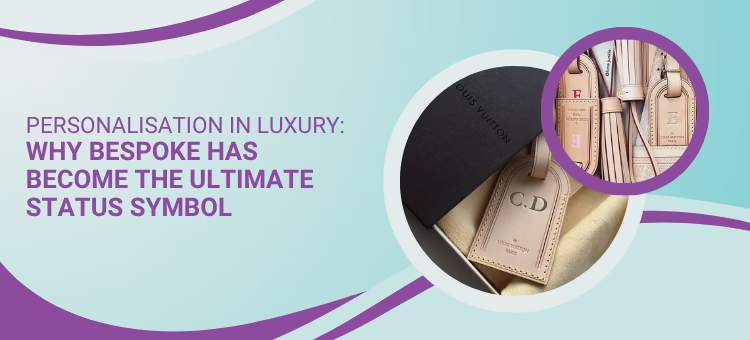
Modern luxury personalisation encompasses various levels of customisation, from simple to sophisticated. Entry-level customisation might involve adding initials to a Louis Vuitton bag or selecting colours for Gucci sneakers. Mid-tier personalisation includes made-to-measure services, such as tailoring suits or customising handbag leather and hardware combinations.
At the premium end, fully bespoke experiences emerge: designing unique fragrances, commissioning one-of-a-kind jewellery pieces, or curating private art viewings. Luxury brands invest heavily in digital configurators, AI-powered style advisors, and in-store ateliers to make these personalisation options accessible and engaging.
For Indian consumers, personalisation often includes cultural elements that resonate with local traditions while maintaining international luxury standards. This might involve incorporating traditional motifs into contemporary designs or adapting global luxury products to suit Indian lifestyle preferences.
The Strategic Value of Bespoke Experiences
Emotional Connections Drive Loyalty
Personalised luxury creates deeper emotional bonds between consumers and brands. When customers collaborate on product design or receive tailored services, purchases become extensions of their identity rather than simple transactions. This emotional investment transforms casual buyers into brand advocates who develop long-term relationships with luxury houses.
Premium Pricing and Perceived Value
Consumers willingly pay significant premiums for products that feel uniquely theirs. Bespoke offerings not only command higher prices but also reinforce brands’ positioning as exclusive and customer-centric. This pricing power becomes particularly valuable in competitive markets where differentiation through traditional means becomes challenging.
Social Media Amplification
Personalised products generate organic social media content as customers share their unique creations. This user-generated content provides authentic brand promotion while showcasing the personalisation possibilities to potential customers. In India’s highly connected social media landscape, this amplification effect proves particularly valuable for brand building.
Technology Enabling Personalisation at Scale
Advanced technologies make sophisticated personalisation accessible to broader audiences. Artificial intelligence and data analytics help brands anticipate customer preferences and suggest relevant customisation options. Three-dimensional configurators allow customers to visualise and modify designs in real-time, whether they’re customising watches, footwear, or accessories.
Virtual consultation services connect clients with designers regardless of geographic location, breaking down traditional barriers to bespoke services. These technologies ensure personalisation experiences remain both convenient and immersive, whether conducted online or in physical stores.
For Indian consumers spread across diverse geographic locations, these digital capabilities prove especially valuable in accessing personalisation services that were previously available only in major metropolitan centres.
Notable Success Stories
Burberry’s Digital Innovation
Burberry’s digital scarf customisation platform demonstrates how technology can make bespoke experiences intuitive and engaging. Customers design personalised scarves through user-friendly interfaces while receiving guidance from in-store experts for truly bespoke results.
Sabyasachi’s Cultural Integration
In India’s context, designer Sabyasachi Mukherjee exemplifies successful personalisation through his bridal couture offerings. Each piece emerges from close collaboration with clients, blending traditional Indian craftsmanship techniques with personal stories and contemporary aesthetics. His approach demonstrates how personalisation can honour cultural heritage while meeting modern luxury expectations.
Rolls-Royce’s Ultimate Bespoke
Rolls-Royce has transformed personalisation into high art, allowing clients to customise everything from exterior paint colours matched to meaningful objects to intricate interior embroidery. This comprehensive personalisation transforms vehicle purchases into luxury journeys that reflect individual taste and personality.
Challenges and Strategic Considerations
While personalisation offers significant opportunities, it also presents operational challenges. Managing bespoke orders requires agile production systems and flexible supply chains capable of handling unique specifications efficiently. Brands must balance personalisation options with core identity maintenance and quality standards.
Privacy considerations become crucial as brands collect and utilise detailed customer data to enable personalisation. Responsible data management practices build trust while protecting customer information.
However, brands that successfully navigate these challenges gain not just increased sales but lifelong customer relationships and powerful word-of-mouth marketing.
India’s Personalisation Advantage
India’s luxury market, rooted in centuries of artisanal craftsmanship and customisation traditions, is uniquely positioned to embrace personalisation trends. From traditional jewellery crafted to specific requirements to contemporary fashion incorporating regional influences, Indian consumers naturally appreciate bespoke offerings.
As international luxury brands expand their Indian presence, many are developing personalisation services specifically tailored to local preferences and cultural sensitivities. This localisation approach creates authentic connections with Indian consumers while respecting cultural values.
The future of luxury lies in understanding that modern consumers seek more than ownership, they desire creation, experience, and self-expression. Personalisation transforms luxury from passive consumption into active collaboration, making each purchase a reflection of individual identity and values.
Understanding these evolving consumer expectations and the operational complexities of delivering personalised luxury experiences requires sophisticated knowledge of both market dynamics and brand management principles.
At LCBS, we prepare future luxury leaders to navigate this personalisation revolution while building sustainable brand relationships.
Ready to master the art of personalised luxury management? Discover how LCBS can prepare you for this exciting industry evolution at lcbs.edu.in.