

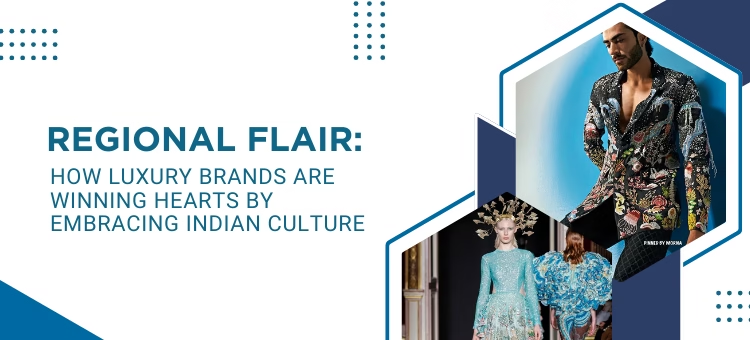
The luxury landscape has undergone a remarkable transformation. Where once European capitals dictated global trends, today’s most successful luxury brands understand that authentic appeal requires local resonance. In India, this shift has created fascinating opportunities for brands willing to honour traditions while maintaining their premium positioning. The brands thriving in India’s dynamic luxury market have discovered that true sophistication lies not just in imposing foreign aesthetics but also in celebrating local heritage with global finesse.
The Cultural Imperative
India’s luxury consumers possess sophisticated expectations that extend far beyond product quality or brand prestige. They seek brands that demonstrate genuine understanding of their cultural values, regional traditions, and personal narratives. This demand for cultural authenticity has prompted both international luxury houses and domestic brands to develop strategies that honour India’s incredible diversity while preserving their core brand identity.
The most successful approaches avoid superficial cultural appropriation in favour of meaningful collaboration and respectful interpretation. Brands that invest time in understanding regional nuances, partnering with local artisans, and creating authentic cultural connections consistently outperform those relying solely on global brand recognition.
International Brands Embracing Indian Sensibilities
Hermès and the Art of Cultural Translation
Hermès’s approach to the Indian market exemplifies thoughtful cultural integration. Their India-exclusive saris represent more than product adaptation; they demonstrate how French craftsmanship traditions can honour Indian textile heritage without diminishing either. These pieces appeal to consumers who appreciate both international luxury standards and meaningful cultural connections.
Bulgari’s Meaningful Adaptation
Bulgari’s contemporary interpretation of the mangalsutra showcases how luxury brands can address culturally significant products with sensitivity and sophistication. Rather than simply adding Indian motifs to existing designs, Bulgari created pieces that respect the mangalsutra’s cultural importance while offering contemporary aesthetics that appeal to modern Indian women.
Collaborative Excellence
The Christian Louboutin and Sabyasachi collaboration demonstrates how cross-cultural partnerships can create truly exceptional products. By combining Louboutin’s Parisian sophistication with Sabyasachi’s deep understanding of Indian aesthetic traditions, this partnership produced pieces that felt neither foreign nor derivative, but genuinely innovative.
Similarly, Dior’s Mumbai fashion show featuring artisans from the Chanakya School of Craft created platform for Indian craftsmanship while reinforcing the brand’s commitment to artisanal excellence. These initiatives benefit both international brands seeking authentic local connections and Indian artisans gaining global recognition.
Indian Brands Leading Cultural Authenticity
Indian luxury brands like Sabyasachi, Rahul Mishra, and Forest Essentials have built international recognition by remaining authentically rooted in Indian traditions while meeting global luxury standards. Their success demonstrates that deep cultural knowledge combined with excellent execution creates compelling value propositions for both domestic and international markets.
Sabyasachi’s Global Appeal
Sabyasachi’s expansion into international markets, including flagship stores in New York, proves that authentic Indian luxury aesthetics resonate globally. By maintaining cultural integrity while adapting to different market expectations, the brand has created distinctive luxury experiences that feel both familiar and exotic to different consumer segments.
Rahul Mishra’s Artisanal Innovation
Rahul Mishra’s integration of traditional techniques like chikankari and zardozi into contemporary luxury fashion showcases how heritage craftsmanship can drive innovation rather than limiting it. His international success demonstrates that technical excellence and cultural authenticity create powerful competitive advantages in global luxury markets.
Strategic Regionalisation Approaches
Visual Merchandising and Environmental Design
Successful luxury brands in India understand that store environments must reflect local aesthetic sensibilities while maintaining international standards. Louis Vuitton’s India-focused store displays and Sabyasachi’s haveli-inspired boutiques create immersive experiences that feel culturally authentic rather than forced or superficial.
Festival-Focused Marketing
Brands that align their marketing calendars with Indian festivals and cultural celebrations demonstrate cultural understanding while creating relevant purchase occasions. These campaigns succeed when they feel genuinely celebratory rather than opportunistic, requiring deep cultural knowledge and sensitive execution.
Regional Influencer Partnerships
Collaborations with Bollywood personalities and regional cultural figures help brands build authentic connections with diverse Indian audiences. These partnerships work best when they reflect genuine brand alignment rather than simple celebrity endorsement strategies.
Global Perspectives on Regionalisation
India’s experience with luxury regionalisation reflects broader global trends. Louis Vuitton’s collaborations with Japanese artists, Gucci’s China-specific campaigns, and Chanel’s Middle Eastern collections demonstrate that successful luxury brands worldwide adapt to local preferences while maintaining brand integrity.
The most effective approaches balance universal luxury values, quality, craftsmanship, and exclusivity with region-specific cultural elements that create emotional connections with local consumers. This balance requires a sophisticated understanding of both brand heritage and local culture.
Experiential Luxury and Personal Connection
Indian luxury consumers increasingly value personalised experiences that reflect their individual preferences and cultural backgrounds. Private trunk shows in smaller cities, bespoke wedding services, and customised festival gifting options demonstrate how brands can create meaningful connections through personalised service delivery.
Sustainability initiatives also benefit from regional adaptation, as brands highlight local materials, traditional techniques, and environmental practices that resonate with culturally conscious consumers.
The Delicate Balance of Cultural Adaptation
Successful regionalisation requires avoiding both cultural appropriation and superficial symbolism. The most effective strategies involve genuine collaboration with local artisans, deep research into cultural significance, and authentic respect for traditional practices. Brands must demonstrate cultural understanding while maintaining the quality standards and design excellence that define luxury.
Future Opportunities
As India’s luxury market continues expanding, opportunities exist for brands that can authentically bridge global luxury standards with regional cultural depth. Success requires understanding that Indian consumers seek neither foreign imports nor purely local products, but sophisticated fusion that honours both heritage and innovation.
At LCBS, we prepare luxury professionals to navigate these cultural complexities while building successful global-local strategies.
Ready to master culturally intelligent luxury management? Discover how LCBS can prepare you for India’s dynamic luxury landscape at lcbs.edu.in.