

The global luxury industry has undergone a fundamental shift in recent years, with India emerging not only as a significant consumer market but also as a creative force reshaping the very definition of luxury. This transformation extends beyond economic statistics to encompass cultural influence, design innovation, and philosophical approaches to premium experiences that are capturing international attention.
Heritage as Innovation Catalyst
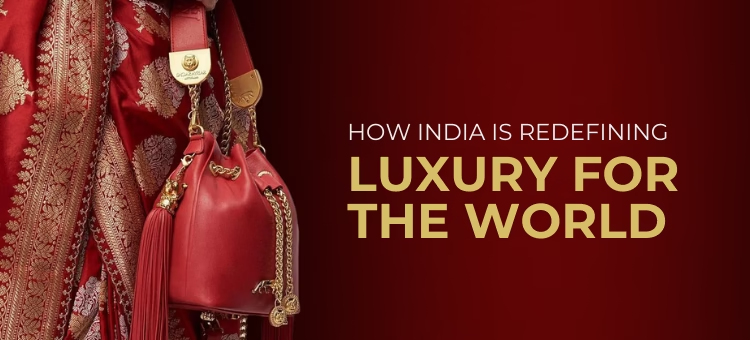
India’s approach to luxury differs markedly from Western models by treating tradition as a source of innovation rather than constraint. Contemporary designers like Sabyasachi and Rahul Mishra have demonstrated how centuries-old techniques such as zardozi embroidery and chikankari needlework can create entirely modern luxury propositions. Their success lies not in preserving traditions unchanged, but in reimagining them for contemporary contexts.
This philosophy extends beyond fashion into beauty and wellness. Forest Essentials has transformed Ayurvedic formulations from household remedies into internationally coveted luxury products, proving that authenticity combined with contemporary presentation can command premium prices globally. The brand’s success illustrates how traditional knowledge systems can become luxury differentiators when properly articulated and marketed.
Such approaches challenge the historical emphasis on European heritage in luxury by demonstrating that cultural depth and artisanal excellence exist globally, creating opportunities for more diverse luxury narratives that resonate with increasingly sophisticated international consumers.
International Adaptation and Recognition
Global luxury houses have begun acknowledging India’s creative influence through meaningful collaboration rather than superficial appropriation. Dior’s fashion show at Mumbai’s Gateway of India featured genuine partnerships with local artisans from the Chanakya School of Craft, creating authentic cultural exchange that enhanced both the brand’s narrative and local craftspeople’s recognition.
Similar initiatives by Bulgari, which reinterpreted the culturally significant mangalsutra necklace, and Hermès, which created India-exclusive saris, demonstrate sophisticated understanding of local cultural contexts. These products succeed because they respect cultural significance While meeting international luxury standards, creating genuine cultural bridges rather than tokenistic gestures.
The hospitality sector provides another compelling example. The Taj and Oberoi hotel groups have established “Indian hospitality” as a globally recognised luxury standard, with their service philosophy and architectural approaches influencing international luxury hotel development. Properties worldwide now study Indian hospitality principles to enhance guest experiences.
Technology Integration and Digital Innovation
India’s luxury sector demonstrates how technology can enhance rather than diminish premium experiences. Digital innovation in luxury retail, from AI-powered virtual fittings to immersive online experiences, has created new standards for customer engagement that global brands are adopting.
E-commerce platforms like Nykaa Luxe and Tata CLiQ Luxury have pioneered approaches to online luxury retail that maintain exclusivity While expanding accessibility. Their festival-timed launches and regionally curated selections demonstrate how digital platforms can honour cultural preferences While serving diverse markets efficiently.
Premium real estate developments incorporate virtual reality showcases and customisation technologies that allow clients to experience luxury properties before construction completion. These innovations influence global luxury property marketing by demonstrating how technology can support rather than replace personal luxury experiences.
Sustainable Luxury Leadership
India’s contemporary luxury brands increasingly emphasise environmental and social responsibility, influencing global luxury industry standards. Companies like Anita Dongre and Good Earth have built brand identities around sustainable practices, ethical sourcing, and community development, proving that conscious consumption can coexist with luxury positioning.
Traditional techniques such as natural dyeing, handloom production, and upcycling have been elevated from necessity to premium selling points. These approaches challenge luxury’s historical association with excess by demonstrating that restraint, sustainability, and cultural responsibility can enhance rather than compromise luxury experiences.
Ayurvedic principles, vegan leather alternatives, and transparent supply chains have become luxury differentiators that international brands study and adapt. This shift reflects broader consumer preference changes towards meaningful consumption that aligns personal values with purchasing decisions.
Experiential Luxury Innovation
India’s contribution to experiential luxury extends beyond traditional categories into comprehensive lifestyle propositions. Bespoke destination weddings, spiritual wellness retreats, and cultural immersion experiences have created new luxury categories that international markets increasingly seek.
The integration of festival calendars, spiritual practices, and hospitality traditions into luxury experiences demonstrates how cultural authenticity can become commercial advantage. These experiences appeal to global consumers seeking meaningful engagement rather than superficial luxury consumption.
Culinary tourism, artisanal workshops, and cultural education programmes have established India as a luxury destination for authentic experiences. This approach influences global luxury travel by emphasising cultural immersion over conventional luxury amenities.
Consumer Influence and Global Impact
India’s luxury consumers, particularly younger demographics, exercise influence beyond their immediate purchasing power. Their preferences for sustainability, personalisation, and cultural authenticity shape global luxury strategies as brands recognise their expanding influence through digital platforms and international mobility.
These consumers demand luxury experiences that reflect personal values While maintaining quality and exclusivity standards. Their purchasing decisions influence global inventory, marketing strategies, and product development across luxury categories.
The Indian diaspora’s global presence amplifies this influence, creating demand for Indian luxury experiences and products in international markets While establishing cultural bridges that benefit both Indian and international luxury brands.
Future Implications
India’s influence on global luxury reflects broader shifts towards cultural diversity, sustainability consciousness, and experiential consumption that are reshaping the industry fundamentally. Rather than simply adopting Western luxury models, India has demonstrated how local cultural values can create globally appealing luxury propositions.
This transformation suggests that future luxury success will require cultural intelligence, authentic storytelling, and sustainable practices that Indian brands have pioneered. Understanding these developments and their implications for global luxury markets requires sophisticated knowledge of cultural dynamics, consumer psychology, and business strategy.
At LCBS, we provide comprehensive education about luxury’s evolving landscape, preparing professionals to navigate cultural complexity While building successful global luxury strategies.
Ready to understand luxury’s cultural evolution? Discover how LCBS develops culturally intelligent luxury professionals at lcbs.edu.in.