

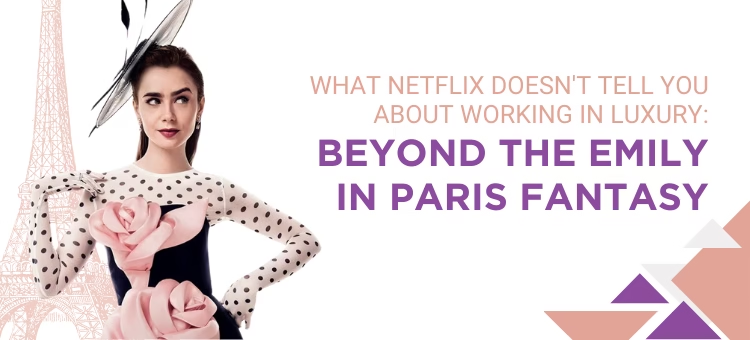
Television’s portrayal of luxury brand management typically involves champagne-soaked client meetings, last-minute campaign pivots that somehow work perfectly, and wardrobes that would bankrupt most professionals. Emily in Paris exemplifies this fantasy – complete with all Parisian backdrops and designer outfits, and conveniently simple solutions to complex brand challenges. While the show certainly captures the luxury industry’s aspirational appeal, it bears little resemblance to the sophisticated strategic work that actually drives premium brands.
The reality of luxury brand management, particularly in India’s rapidly evolving market, involves considerably more analytical thinking and cultural intelligence than television suggests, though it’s arguably more rewarding than any scripted drama.
The Television Fantasy Versus Professional Reality
Emily in Paris presents luxury marketing as a series of glamorous improvisations – spontaneous influencer partnerships, overnight campaign successes, and meetings that somehow resolve major brand crises within thirty-minute episodes. The show’s appeal lies in its visual luxury and seemingly effortless creativity, creating an attractive but misleading impression of the profession.
Actual luxury brand management requires months of strategic planning, deep cultural understanding, and meticulous attention to brand heritage. The campaigns that appear effortless on screen typically represent extensive research, cross-functional collaboration, and careful consideration of market dynamics that television producers find less visually compelling than romantic subplots.
The most significant oversight in popular portrayals involves the analytical foundation underlying luxury marketing decisions. Brand managers rely heavily on consumer insights, sales data, market research, and performance metrics rather than creative inspiration alone. Every campaign element, from celebrity partnerships to seasonal collections, reflects strategic calculations rather than spontaneous brilliance.
The Strategic Complexity of Luxury Brand Management
Modern luxury brand managers function as strategic orchestrators who must balance competing priorities while maintaining brand integrity. Their responsibilities encompass positioning strategy, cultural adaptation, digital marketing, relationship management, and crisis communication – often simultaneously across multiple markets and consumer segments.
The role demands a sophisticated understanding of luxury consumer psychology, which differs fundamentally from mass market behaviour. Luxury purchasers often research extensively before buying, expect personalised experiences, and maintain long-term relationships with brands that extend beyond individual transactions. Managing these relationships requires emotional intelligence and cultural sensitivity that traditional business education rarely addresses.
Digital fluency has become essential as luxury consumers increasingly begin their journeys online, while expecting seamless integration with offline experiences. Brand managers must understand how to maintain exclusivity in digital environments, leverage social commerce without diminishing brand prestige, and create personalised experiences that feel intimate rather than algorithmic.
India’s Unique Luxury Landscape
India’s luxury market presents particular complexities that television portrayals rarely acknowledge. Regional diversity means that successful campaigns in Mumbai might fail in Chennai, while festival timing significantly influences purchasing behaviour in ways that international brand managers often underestimate.
Cultural sensitivity extends beyond surface-level adaptations to encompass a deep understanding of family decision-making processes, regional aesthetic preferences, and traditional luxury concepts that may differ from Western interpretations. Successful brand managers must appreciate how Indian luxury consumers balance heritage appreciation with contemporary aspirations.
The influencer ecosystem in India spans Bollywood celebrities, regional style icons, and micro-influencers whose audiences reflect specific cultural communities. Managing these relationships requires an understanding of entertainment industry dynamics, regional languages, and cultural celebrations that influence content creation and audience engagement.
Digital adoption among Indian luxury consumers has accelerated rapidly, creating opportunities for innovative customer engagement while challenging traditional retail models. Brand managers must develop strategies that honour luxury’s exclusive positioning while leveraging technology to expand accessibility and improve customer experiences.
Essential Professional Competencies
Successful luxury brand managers combine analytical thinking with creative intuition, strategic planning with tactical execution, and global awareness with local sensitivity. They must understand the financial implications of brand decisions while appreciating emotional drivers behind luxury consumption.
Project management skills prove crucial as luxury campaigns involve complex coordination between creative agencies, production teams, retail operations, and public relations specialists. Launch timelines often span months and require precise coordination to ensure every touchpoint reflects brand standards.
Crisis management capabilities have become increasingly important as social media amplifies both positive and negative brand experiences. Luxury brand managers must anticipate potential issues, develop response protocols, and maintain brand reputation while addressing legitimate concerns transparently.
Cross-cultural communication skills enable effective collaboration with diverse teams, international colleagues, and varied consumer segments. This involves understanding not just language differences but also professional cultures, decision-making styles, and relationship expectations that vary across markets.
Authentic Career Preparation
Entering luxury brand management requires more than aesthetic appreciation or lifestyle aspiration. The most successful professionals combine a passionate interest in luxury with solid business fundamentals, analytical capabilities, and genuine cultural curiosity.
Specialised education provides an essential foundation of knowledge about luxury market dynamics, consumer psychology, brand strategy, and digital marketing approaches that generic business programmes rarely address comprehensively. Industry-specific coursework helps students understand the subtle differences between luxury and premium positioning, heritage brand management, and exclusivity strategies.
Practical experience through internships, consulting projects, or entry-level positions provides insights into operational realities that classroom discussions cannot replicate. Understanding how luxury brands actually function – from inventory management to customer service delivery – informs strategic decisions throughout career progression.
Networking within luxury industry communities creates opportunities for mentorship, career advancement, and collaborative projects. The luxury sector values personal relationships and cultural intelligence, making professional connections particularly important for career development.
Professional Rewards Beyond Television Drama
Despite its analytical demands and strategic complexity, luxury brand management offers unique satisfactions that television portrayals occasionally capture. The opportunity to shape cultural conversations, support traditional craftsmanship, and create experiences that provide genuine pleasure justifies the profession’s demanding preparation requirements.
At LCBS, we provide the analytical skills, cultural intelligence, and industry connections that prepare students for authentic luxury brand management careers rather than television fantasies.
Ready to understand luxury’s strategic complexity? Discover how LCBS develops accomplished luxury professionals at lcbs.edu.in.