

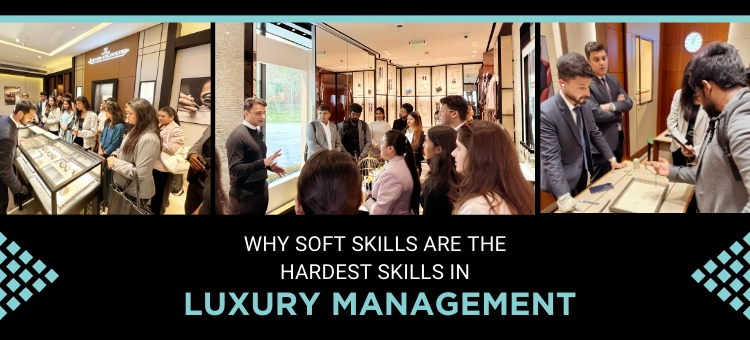
The luxury industry presents a curious paradox: While technical expertise and business acumen certainly matter, success often hinges on competencies that business schools traditionally treat as secondary concerns. These so-called “soft skills” – emotional intelligence, cultural sensitivity, relationship building – prove remarkably difficult to master and essential for luxury management success.
The terminology itself misleads. There’s nothing soft about developing genuine empathy, nothing easy about navigating complex cultural dynamics, and nothing simple about building authentic relationships with discerning luxury consumers who can detect insincerity from considerable distances.
The Relationship-Centric Nature of Luxury Business
Luxury management differs fundamentally from conventional business models because it prioritises emotional connection over transactional efficiency. While mass market brands focus on volume and convenience, luxury brands sell aspirations, heritage, and exclusivity – intangible values that require sophisticated interpersonal skills to communicate effectively.
Consider the luxury sales process. High-net-worth individuals often research purchases for months, expect personalised consultation, and maintain long-term relationships with brands that extend far beyond individual transactions. Managing these relationships requires professionals who can demonstrate genuine interest, cultural awareness, and emotional intelligence that build trust over time.
The stakes amplify in luxury because mistakes prove costly. A culturally insensitive campaign or mishandled client relationship can damage a brand’s reputation that took decades to establish. These risks make interpersonal competencies essential business skills rather than optional personal attributes.
Cultural Intelligence as Competitive Advantage
India’s luxury market exemplifies why cultural fluency has become essential for professional success. The market encompasses multiple languages, religious traditions, regional preferences, and generational differences that influence luxury consumption patterns significantly.
Understanding these dynamics requires more than demographic data or market research. Successful luxury managers develop an intuitive appreciation for cultural subtleties – when certain colours become significant during festivals, how family dynamics influence purchasing decisions, and why particular design elements resonate with specific communities.
This cultural intelligence proves particularly crucial when international luxury brands enter Indian markets or when Indian luxury brands expand globally. Professionals who can authentically bridge cultural differences create competitive advantages that pure business strategy cannot replicate.
The complexity extends beyond customer relationships to include vendor management, artisan partnerships, and team leadership across diverse cultural contexts. Each relationship requires adapted communication styles and cultural sensitivity that formal training rarely addresses comprehensively.
Emotional Intelligence in High-Stakes Environments
Luxury management involves considerable pressure – tight deadlines, significant budgets, high-profile clients, and intense scrutiny that can trigger stress responses. Emotional intelligence becomes essential for maintaining professional composure while making sound decisions under pressure.
The skill involves multiple competencies: self-awareness to recognise personal emotional triggers, self-regulation to maintain professional behaviour during challenging situations, and social awareness to read client needs and team dynamics accurately.
Leading luxury projects requires motivating diverse teams that may include creative professionals, technical specialists, and business strategists with different working styles and communication preferences. Understanding how to inspire collaboration amongst varied personality types, while maintaining quality standards, demands sophisticated emotional intelligence.
Crisis management situations particularly test these capabilities. When luxury brands face public relations challenges, supply chain disruptions, or customer complaints, the response quality often determines whether temporary problems become permanent reputation damage.
The Art of Authentic Communication
Luxury brands communicate differently from mass market companies because their audiences expect sophisticated messaging that honours both brand heritage and contemporary relevance. This requires professionals who can craft narratives that feel authentic rather than calculated, exclusive rather than exclusionary.
The communication challenge extends across multiple channels and audiences. Social media requires different approaches than face-to-face client consultation, while international campaigns need cultural adaptation without losing brand consistency. Each context demands a nuanced understanding of appropriate tone, timing, and messaging strategies.
Storytelling abilities prove particularly valuable because luxury brands sell narratives alongside products. Whether explaining artisanal techniques, brand history, or product development processes, luxury professionals must communicate complex information in compelling ways that maintain audience engagement while conveying expertise.
Internal communication proves equally important. Luxury teams often include creative professionals who think differently from analytical business specialists. Successful managers learn to translate between different professional languages while maintaining team cohesion and shared vision.
Development Strategies for Professional Growth
Building these competencies requires deliberate effort over extended periods. Unlike technical skills that can be learned through coursework and practice, interpersonal abilities develop through experience, reflection, and continuous learning.
Cultural competence grows through genuine engagement with diverse communities, languages, and traditions. This involves moving beyond surface-level knowledge to develop an authentic appreciation for different perspectives and values. Travel, language learning, and cultural immersion experiences provide foundations, but ongoing curiosity and openness determine long-term development.
Emotional intelligence improves through self-reflection, feedback collection, and conscious practice in challenging situations. Many professionals benefit from mentorship relationships with experienced luxury managers who can provide guidance and perspective on interpersonal challenges.
Communication skills are strengthened through various experiences – public speaking, writing, debate, and performance activities that build confidence and versatility. The key involves seeking opportunities to communicate with diverse audiences about complex topics while receiving constructive feedback.
Business Impact of Interpersonal Excellence
These competencies translate directly into measurable business outcomes. Professionals with strong relationship-building skills generate higher customer lifetime value, create more effective team collaborations, and develop strategic partnerships that drive business growth.
Cultural intelligence enables market expansion opportunities and reduces risks associated with cultural misunderstandings. Emotional intelligence improves leadership effectiveness and crisis management capabilities. Communication skills enhance brand positioning and customer engagement across all touchpoints.
The investment in developing these capabilities pays returns throughout career progression. Senior luxury management roles increasingly require professionals who can navigate complex stakeholder relationships, lead diverse teams, and represent brands authentically in various cultural contexts.
Ready to develop the interpersonal competencies that drive luxury career success? Discover how LCBS builds both business expertise and emotional intelligence at lcbs.edu.in.