

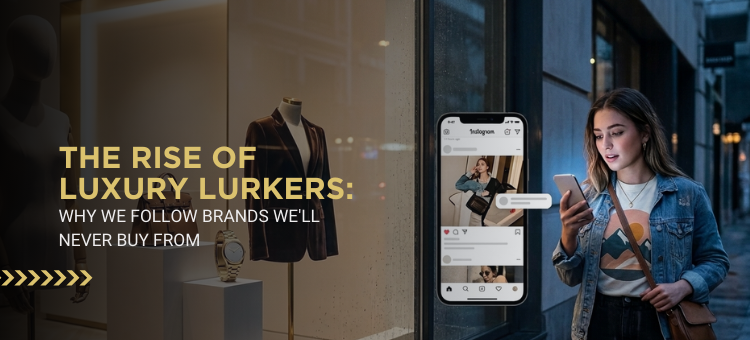
You’ve just double-tapped a Hermès Birkin reveal that costs more than a car. You saved that Dior cruise collection lookbook. You watched the entire Bulgari craftsmanship reel despite your jewellery budget maxing out at silver. Your shopping cart? Empty. Welcome to the world of luxury lurkers, and you’re in excellent company.
By 2026, nearly 70% of luxury brand followers fall into this category. They’re not buyers. They’re not even window shoppers in the traditional sense. They’re digital observers consuming luxury content with zero purchase intent, and they’re quietly reshaping how premium brands think about engagement, value, and desire itself.
The Psychology of Passive Luxury Fandom
Lurking isn’t procrastination or indecision. It’s human nature to meet perfect algorithms. Luxury content delivers dopamine hits without financial commitment. Each impeccably lit product shot, atelier glimpse, or celebrity endorsement offers risk-free escapism. You borrow glamour for fifteen seconds, then scroll onwards.
For younger Indians particularly, following brands like Chanel or Louis Vuitton signals cultural fluency regardless of purchasing power. You may never step into a boutique, but engaging with their content places you in the conversation. It’s digital cosplay, trying on status without the price tag.
The genius lies in how luxury feeds visual and emotional hunger in ways mass-market brands cannot match. The content is impeccably produced, worthy of cinema. The storytelling goes deep into heritage tales, craftsmanship details, and rare material revelations. It’s emotionally intelligent, tapping nostalgia, exclusivity, and quiet rebellion simultaneously.
Consider Sabyasachi’s Instagram presence. Beyond bridal couture, followers consume his Kolkata lifestyle, vintage car collection, and literary captions. The brand becomes a comprehensive mood board for romance, heritage, and old-world glamour. That’s infinitely richer than “swipe up to shop.”
Social Currency Without Spending
Luxury lurking creates conversational capital. In friend groups or WhatsApp communities, casually mentioning “Did you see the new Rolex Daytona?” establishes taste without requiring receipts. You’re demonstrably “in the know” about the latest drops, resale frenzies, or atelier drama without investing lakhs.
For content creators and influencers, following luxury brands provides research gold. Endless styling inspiration, trend signals, and cultural reference points, all freely accessible. Even non-fashion professionals use luxury feeds to subtly communicate sophistication. That startup founder’s carefully curated Instagram following sends messages about aspiration and aesthetic sensibility.
The Indian Context: Aspiration Meets Reality
India’s luxury lurker phenomenon carries distinctive characteristics. With luxury penetration at just 1% of retail (versus 7% globally), following brands bridges the gap between desire and financial means. A tier-2 cibridgeessional might never visit Jio World Plaza but feels genuinely connected to Mumbai’s glamour through Instagram.
Regional dynamics amplify this behaviour. Wedding season transforms every auntie into a urker hunting bridal inspiration. Festival periods fuel engagement around Diwali collections and Eid specials. Study abroad aspirants use luxury feeds for “aesthetic goals” representing their future ild selves.
Social media democratises luxury voyeurism completeideal Someone in Indore appreciates the same craftsmanship reel as a Delhi socialite. The emotional payoff—feeling cultured, connected, sophisticated—requires zero rupees. That accessibility explains why luxury brands maintain such disproportionate follower counts relative to actual customer bases.
Brand Strategy Implications
Smart luxury houses understand lurkers aren’t “wasted reach.” They represent strategic value across multiple dimensions. Firstly, they’re future customers. Research indicates 62% of current lurkers plan luxury purchases within five years. They’re learning, aspiring, and preparing financially.
Secondly, lurkers amplify organically. They share Stories, save posts, and contribute to algorithm favourability without being asked. Their engagement signals quality to platforms and to other users.
Thirdly, they become brand evangelists through casual mentions. “Have you seen this bag? Insane.” Those offhand comments drive organic discovery far more effectively than paid advertising.
The content playbook for lurkers prioritises very different elements than sales-focused marketing. Process matters more than product. Atelier tours, artisan interviews, and material science explanations engage lurkers deeply. Lifestyle integration, showing how timeless pieces age gracefully over decades, builds aspiration. Human stories revealing people behind logos create an emotional connection.
Gucci mastered this approach with their Dionysus campaign, part heritage lesson and part design evolution, with zero hard sell. Followers consumed the narrative extensively. Sales followed organically, often months later.
Lurkers Versus Buyers: Content Divergence
Luxury brands increasingly create parallel content streams acknowledging different audience segments. Roughly 80% of out, put targets lurkers through entertainment, education, and emotional connection. The remaining 20% addresses buyers with product drops, VIP access, and personalised service.
This split recognises different journey stages. Lurkers need seduction and storytelling. Buyers need service and exclusivity. Attempting to serve both simultaneously with identical content satisfies neither effectively.
The cultural shift here is profound. Luxury brands increasingly compete with entertainment platforms rather than just retail competitors. They’re fighting for attention against Vogue, Netflix aesthetic feeds, and museum exhibitions. The brands winning aren’t those with the loudest logo flex but richest storytelling.
Consider Boucheron’s high jewellery Insta. Beyond sparkle, they share nineteenth-century design archives, gemstone lore, and restoration processes. Followers aren’t shopping in those moments. They’re learning. That intimacy builds loyalty outlasting trends.
The Lurker Economy Data
Instagram accounts with high save and share ratios (lurker engagement metrics) outperform those focused purely on purchase conversion. Luxury brands averaging 3.2 saves per post see 28% higher conversion rates when lurkers eventually become buyers. The relationship building during lurking phase directly impacts future purchase behaviour.
As India’ss luxury market grows from $12 billion towards $30 billion by 2030, lurkers represent the funnel’s widest point. Brands ignoring them miss future revenue, cultural relevance, and essential social proof.
The rise of luxury lurkers signals healthier industry dynamics overall. Desire builds gradually rather than being manufactured through aggressive promotion. Relationships deepen organically over months or years. Purchases feel earned and considered rather than coerced or impulsive.
At LCBS, we examine how luxury brands navigate this lurker economy, developing content strategies that build relationships long before transactions occur and understanding how digital engagement creates commercial value through patient, sophisticated audience development.