

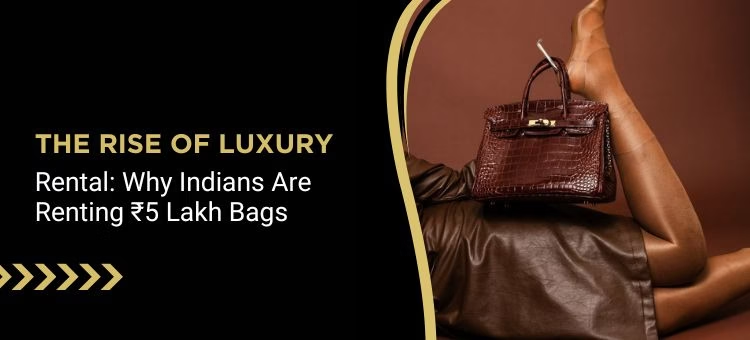
Renting a ₹5 lakh handbag for a weekend wedding would have seemed absurd just years ago, suggesting either financial desperation or questionable priorities. Today, it represents savvy consumption reflecting how India’s luxury consumers think about value, access, and identity. The rental luxury model has shifted from embarrassing secret to smart strategy as Indians increasingly prioritise experience flexibility over permanent ownership.
The Consumer Evolution
India’s contemporary luxury consumers demonstrate fundamentally different characteristics from previous generations. They possess global perspectives shaped by international travel and digital connectivity, exhibit comfort with subscription models across entertainment and lifestyle categories, and approach consumption with an experimental mindset rather than conservative commitment patterns.
This demographic grew up normalising access over ownership through Spotify, Netflix, and similar platforms. Extending identical logic to luxury fashion represents a natural progression rather than a radical departure. The question evolved from whether to embrace access models to which categories make the most sense for rental adoption.
Simultaneously, luxury prices have escalated significantly while social media turbocharged aspirational desire. Iconic pieces from Chanel, Hermès, or Dior exist at intersections of aesthetic preference, status signalling, and personal narrative. For young professionals and content creators, the calculation shifts from “Do I love this?” to “Does investing multiple lakhs in something I’ll carry occasionally make financial sense?” Rental resolves this tension elegantly.
Access as Modern Status Symbol
Luxury rental fundamentally redefines success markers. Traditional status tied to permanent ownership gives way to access when circumstances warrant. For Indian consumers, this proves particularly appealing around weddings and major family functions, milestone celebrations, international travel, where specific aesthetics feel essential, and professional events or content creation requiring particular visual statements.
Rather than committing to a single “safe” investment piece, renters rotate between trending items and timeless icons. This maintains visual freshness whilst keeping financial commitments manageable and reversible. The flexibility appeals especially to consumers whose style preferences evolve rapidly or whose lifestyles involve varied social contexts requiring different aesthetic statements.
This shift reflects broader generational changes in consumption philosophy where experiences and flexibility increasingly outweigh permanent accumulation, particularly among urban professionals managing multiple financial priorities simultaneously.
Social Media’s Amplification Effect
Instagram and short-form video content have accelerated luxury rental adoption more effectively than any traditional marketing could achieve. Outfit repetition carries a persistent stigma in visible social circles, especially for individuals whose professional or lifestyle activities place them constantly before cameras. Rental elegantly solves “new look” pressure without encouraging unsustainable purchasing patterns.
Subtle social capital attaches to rental savviness itself. Carrying recently launched global pieces or accessing niche, hard-to-source items signals fashion conversation engagement and insider knowledge. The rental transaction remains invisible in social media narratives, whilst the prestige remains fully present.
This dynamic creates an interesting paradox where consumption becomes simultaneously more visible through social documentation yet more flexible and less permanent through rental models. The performance of luxury ownership matters more than ownership reality itself.
Financial Rationality Redefined
The mathematics proves compelling when examined objectively. A ₹5 lakh handbag used occasionally over the years demonstrates questionable financial logic compared to renting diverse pieces at a fraction of purchase costs. Indian rental platforms typically offer daily or event-based rentals at small percentages of retail prices, monthly memberships enabling rotation between multiple pieces, and tiered access where higher subscriptions unlock rarer or more valuable items.
For young urban professionals, this aligns with the broader “smart luxury” philosophy, satisfying desire without overwhelming savings goals or preventing other financial priorities. It additionally enables style experimentation and brand exploration before potential long-term purchase decisions.
This financial pragmatism doesn’t diminish luxury appreciation but rather demonstrates a sophisticated understanding of value maximisation. Rental consumers often possess deeper luxury knowledge than traditional buyers precisely because access to variety enables broader education about brands, craftsmanship, and personal preference discovery.
Sustainability Considerations
Environmental consciousness increasingly influences luxury consumption decisions. Rental models where multiple consumers share individual pieces over time extend product lifecycles whilst reducing pressure for constant new production. This circular economy participation appeals to consumers aware of environmental impacts but unwilling to sacrifice aesthetic preferences.
For Indians balancing sustainability consciousness with aspirational desires, rental offers guilt reduction while maintaining style standards. The model positions luxury consumption as a potentially responsible choice rather than a purely indulgent one, particularly appealing to younger consumers whose values increasingly influence purchasing behaviour.
Trust Infrastructure Requirements
Indian consumers approach luxury rental with legitimate concerns around authentication, cleanliness, and transaction security. Successful platforms address these anxieties through authentication guarantees and provenance documentation, professional cleaning and maintenance investment, damage insurance within reasonable parameters, and packaging and delivery mirroring luxury retail standards.
The experience must feel like borrowing from an impeccably organised friend’s wardrobe rather than accessing an anonymous used product pool. Personalisation, communication quality, and presentation standards all contribute to trust building essential for repeat usage and platform advocacy.
Brand Implications and Opportunities
For established luxury houses, rental represents both a challenge and an opportunity. Consumption shifts partially away from direct purchases, but exposure dramatically increases as more consumers carry and develop emotional connections with products. This broader engagement often converts to eventual purchases when incomes rise, or specific pieces create lasting attachment.
Some international luxury brands already experiment with partnerships, certified pre-owned programmes, and controlled rental ecosystems. Indian market opportunities exist for strategic collaborations where brands ensure product care and narrative control whilst accessing younger, highly engaged audiences otherwise priced out of ownership.
Psychological Transformation
Perhaps most significantly, rental fundamentally alters luxury’s psychological positioning. Access models signal that luxury needn’t remain reserved for distant “someday” or inheritance. It becomes something consumers can engage with immediately on personal terms as part of current narratives rather than deferred dreams.
For many Indians, this resonates perfectly with contemporary values balancing ambition with financial pragmatism, image consciousness with spending discipline, and aesthetic desires with environmental awareness. The luxury aspiration hasn’t diminished but rather evolved from permanent acquisition to flexible, circulating possibility, enabling broader participation and experimentation.
Understanding these consumption shifts and their implications for luxury brand strategy requires sophisticated analysis that LCBS addresses through a curriculum combining consumer psychology with business model innovation, preparing professionals to navigate luxury’s evolution beyond traditional ownership paradigms.