

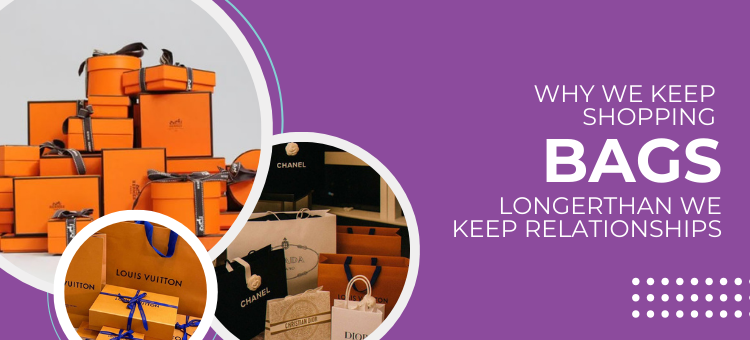
There’s a cream-coloured Hermès box in my wardrobe that’s outlasted three phones, two addresses, and at least one romantic relationship. Inside? Nothing. The scarf it once held has long since been wrapped, worn, and retired. Yet the box remains, carefully stacked alongside its orange brethren, taking up space I claim not to have.
I’m not alone in this peculiar attachment. Walk into most Indian homes where luxury has made an appearance, and you’ll find entire shelves dedicated to empty packaging. Tiffany blue boxes. Louis Vuitton dust bags. Dior ribbons were wound carefully and stored like precious artefacts. We’re hoarding cardboard and paper with the same reverence our grandparents reserved for good china.
The question isn’t why we keep them. It’s why luxury brands spend fortunes ensuring we do.
The Strategy Behind the Box
Luxury packaging isn’t an afterthought design. It’s a calculated brand extension that begins long before purchase and continues long after. When Tiffany trademarked their specific shade of blue in 1998, they weren’t protecting a colour. They were claiming emotional territory. That particular blue triggers anticipation, romance, and aspiration in ways the actual jewellery sometimes struggles to match.
Hermès takes this further. Their boxes are designed to be kept. The sturdy construction, the satisfying weight, the way the lid fits with that subtle resistance, these aren’t accidents of packaging efficiency. They’re engineered to feel permanent. Throwing away a Hermès box feels wasteful in ways discarding typical retail packaging doesn’t.
The genius lies in ongoing brand presence. That orange box sitting in your wardrobe serves as a daily reminder of the brand, your taste, and the moment of acquisition. It’s advertising that you paid for, willingly house, and occasionally photograph for social media. Brands achieve perpetual visibility in the most intimate spaces, your home, without spending another rupee beyond the initial packaging investment.
Memory Making as Material Culture
Luxury brands understand something fundamental about human psychology: we’re terrible at remembering experiences accurately but excellent at remembering objects that represent them. That Cartier box doesn’t just hold a watch. It holds the anniversary dinner, the nervous excitement of opening it, the weight of the gift and the gesture behind it.
In India, this impulse runs particularly deep. We’re culturally predisposed to preservation. Previous generations saved biscuit tins and repurposed them for decades. Luxury packaging taps into this same instinct but elevates it. We’re not saving containers for practical reuse but for emotional continuity.
The box becomes a bookmark in your life story. That Burberry bag dates to your first big promotion. The Chanel packaging reminds you of Paris, even though you bought it at a duty-free shop. These aren’t just keeping boxes, they’re keeping memories in physical form.
The Social Signal Nobody Discusses
Let’s acknowledge the uncomfortable truth: luxury packaging serves as proof. In the era of replicas and rental luxury, the box and bag authenticate not just the product but your purchasing power and taste. Guests see those orange boxes stacked in your wardrobe during a house tour. They notice the Tiffany blue peeking from storage. The packaging communicates that wearing the product cannot, that you own it properly.
This social function explains why some people keep packaging long after selling the item itself. The box outlasts the bag because the box serves a different purpose. It’s easier to display, requires no maintenance, and never goes out of style. In some ways, the packaging is more valuable than the product; it’s simultaneously proof of purchase and a decorative object.
Indian luxury consumers navigate an additional layer here. Luxury purchases often involve family input, joint decisions, or gift-giving contexts. The packaging becomes a shared family artefact, displayed in ways the product itself might not be. Your mother might never carry that Gucci bag, but she’ll definitely show friends the distinctive packaging when explaining what her children gifted her.
When Sentiment Becomes Strategy
Brands now design specifically for this keeping instinct. Packaging has evolved from a protective covering to a collectable object. Limited editions come in special boxes. Seasonal releases feature unique packaging. Collaborations are partly justified by exclusive bags and boxes that become sought after independently.
Some luxury houses quietly encourage this. Hermès orange boxes become interior décor elements in brand imagery. Tiffany displays vintage packaging in brand museums. They validate the impulse to keep, transforming what could seem like hoarding into a sophisticated appreciation of craft and design.
The secondary market has even emerged around luxury packaging. Empty boxes and bags sell on resale platforms, purchased by people who own authentic items but lack original packaging, or by those seeking the brand presence without the product investment. The packaging has become a product.
The Emotional Architecture of Luxury
Here’s what separates luxury packaging from premium: emotional staying power. You’ll toss a premium chocolate box eventually. But that Dior bag? That lives in your cupboard indefinitely, long after rational justification expires.
This persistence happens because luxury brands invest in creating packaging that feels too beautiful to discard. They understand that every time you reorganise your wardrobe and encounter that box, you’re re-experiencing the brand. That’s remarkably efficient marketing. One packaging investment creates hundreds of brand impressions over the years.
At LCBS, we study this phenomenon not as a consumer quirk but as a sophisticated brand strategy. Understanding why people keep empty boxes reveals how luxury creates lasting emotional connections that transcend transactions. The packaging isn’t waste to be discarded, buta relationship tool that keeps customers engaged long after purchase completion.
The boxes we keep aren’t really empty. They’re full of exactly what luxury sells: aspiration, memory, and the feeling that some things are too special to throw away.